Waste Plastic Recycling and Upcycling Vocational Training
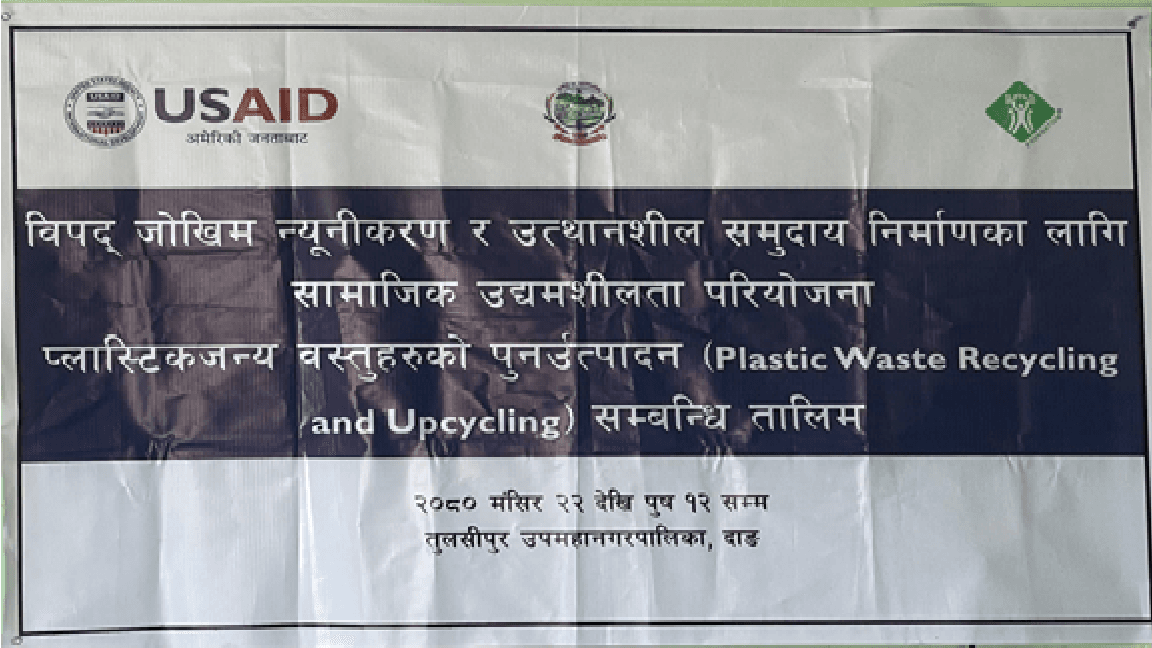
The Waste Plastic Recycling and Upcycling Vocational Training in Tulsipur, Dang was a 21-day capacity-building initiative designed to empower local women through practical skills in plastic waste management, recycling technologies, and eco-entrepreneurship. Conducted with the support of BATAS Foundation, Tayar Nepal, USAID, and Tulsipur Sub-Metropolitan City, the program combined theoretical learning with extensive hands-on workshops, enabling participants to convert low-value plastic waste into functional, market-ready products such as benches, stools, flower pots, and notebook covers. This initiative aimed to reduce local plastic pollution, strengthen green livelihood opportunities, and foster a community-led circular economy model in the Dang region.
Project Objectives
- Equip participants with comprehensive knowledge and skills in plastic recycling, upcycling, and waste management.
- Enable women to produce commercially viable products from recycled plastic and establish a local market presence.
- Build strong partnerships with municipalities, NGOs, and waste management groups to strengthen the local recycling ecosystem.
- Raise awareness on environmental issues related to plastic waste and promote sustainable, eco-friendly livelihood practices.
Key Outcomes
- Successful completion of 21 days of training for 16 local women (ages 16–40), covering theory, machine operation, product design, and prototyping.
- Production of multiple recycled products, including benches, stools, chairs, flower pots, and notebook covers using extrusion, injection, shredder, and sheet-press machines.
- Increased participant confidence and motivation to start micro-enterprises with support from local government authorities.
- Strengthened collaboration between local stakeholders and development partners to support continuity of green livelihood projects.
Challenges Faced
- Limited prior experience among participants in operating mechanical recycling machines.
- Difficulty collecting enough segregated plastic waste during early training sessions.
- Time constraints for women managing household responsibilities alongside daily training.
- Limited exposure to market strategies and difficulties identifying potential buyers for recycled products.
Solutions Implemented
- Provided beginner-friendly, step-by-step instruction on using shredders, injection, extrusion, and sheet-press machines.
- Organized community-level waste collection drives, supplemented by plastic sourced from households and local collectors.
- Designed flexible, participant-centered training routines with daily feedback sessions.
- Conducted sessions on market access, branding, sales negotiation, and product showcasing to build entrepreneurial capacity.
Project Gallery